Key takeaways
The 16-agent architecture
Previous versions of CyberMind ran tools sequentially — one after another in a fixed pipeline. v5.5 introduces 16 specialist agents that run in parallel goroutines, each with a specific role and tool set.
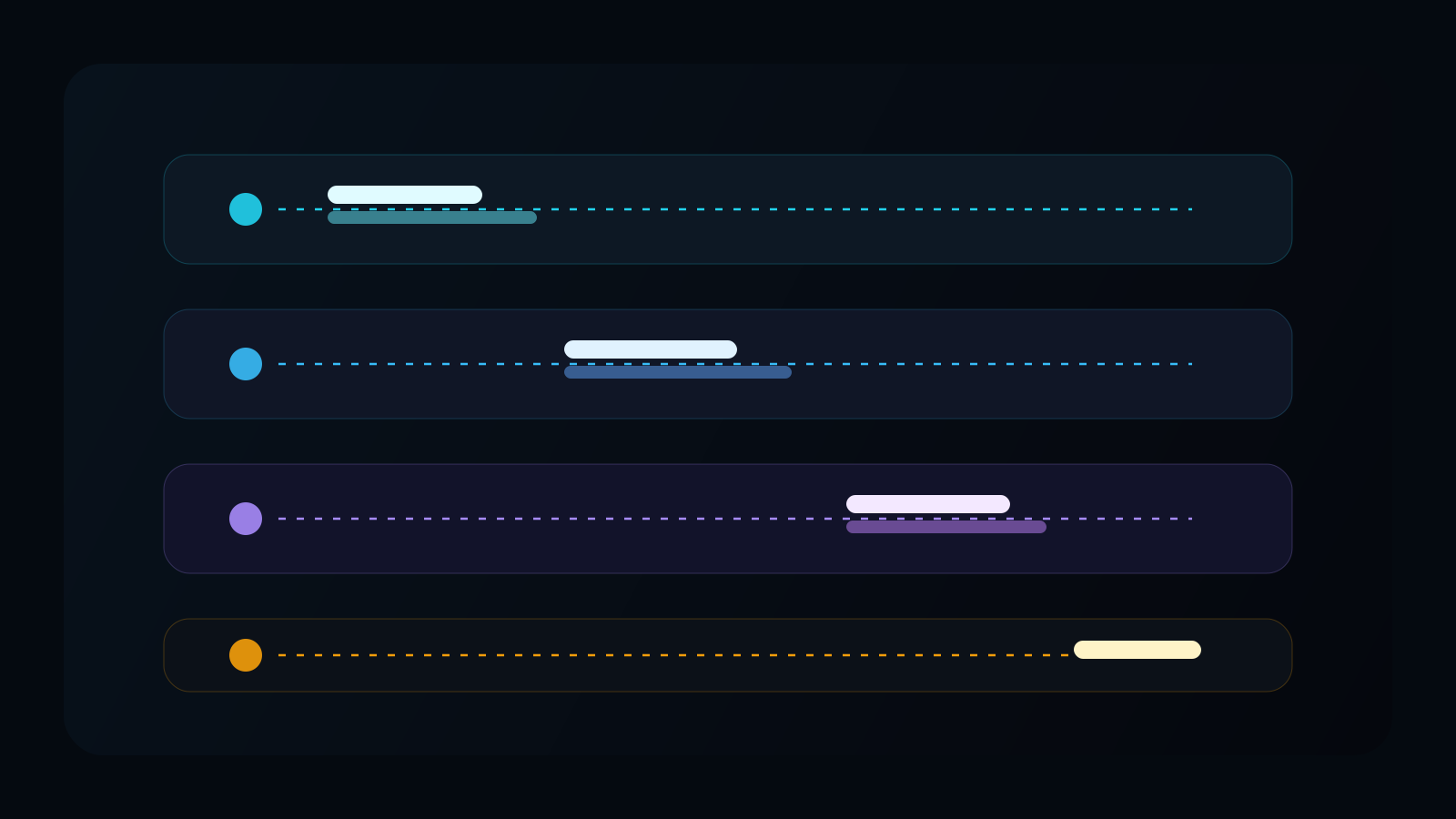
Phase 1 runs 6 recon agents simultaneously: Passive OSINT, Subdomain Enum, Port Scan, HTTP Fingerprint, JS Intelligence, and Secret Scanner. Phase 2 runs 7 hunt agents: XSS Hunter, SQLi, SSRF, Nuclei Templates, OAuth/JWT, Business Logic, and WAF Bypass. Phase 3 runs 3 exploit agents: Cloud Misconfig, HTTP Smuggling, and Exploit Verify.
- Phase 1 (6 recon agents): OSINT, subdomains, ports, HTTP, JS, secrets — all parallel.
- Phase 2 (7 hunt agents): XSS, SQLi, SSRF, nuclei, OAuth, bizlogic, WAF bypass — all parallel.
- Phase 3 (3 exploit agents): cloud misconfig, smuggling, exploit verify — all parallel.
- Each phase waits for the previous to complete before starting.
Knowledge graph — cross-target intelligence
The knowledge graph stores relationships between targets, vulnerabilities, tech stacks, and attack paths. When you scan a new target, CyberMind checks if similar targets (same tech stack, same WAF) had vulnerabilities — and prioritizes those attack vectors first.
This means every scan makes future scans smarter. If you found XSS on a React/Node.js app last week, CyberMind will prioritize XSS testing on similar targets this week.
- Target → Vuln relationships stored as graph nodes.
- WAF bypass patterns saved per vendor (Cloudflare, Akamai, Imperva).
- Similar target detection based on tech stack overlap.
- Attack path suggestions from historical findings.
Real chain execution
The /chain command previously simulated tool execution with time.Sleep() calls. v5.5 replaces this with real tool execution: dalfox for XSS chains, sqlmap for SQLi chains, nuclei for SSRF/RCE chains, and ffuf for IDOR chains.
Chain execution now produces real evidence — actual tool output, not simulated responses. This makes chain findings submittable to bug bounty programs.
Real chain execution in v5.5
# Run hunt first to populate Brain_Memory
cybermind /hunt target.com

# Then chain — uses real tools on confirmed bugs
cybermind /chain target.com
# → dalfox for XSS chains
# → sqlmap for SQLi chains
# → nuclei for SSRF/RCE chains