Key takeaways
What OMEGA should own
OMEGA should be the planning brain of CyberMind, not just another command. Its job is to translate a target into a route: what to enumerate, what to ignore, what to verify, when to escalate, and which tools to chain for the highest expected return.
That matters because speed without selection is just noise. A strong planner saves time by refusing low-signal branches and allocating work to the paths most likely to produce a valid, reportable finding.
- Collect passive evidence first.
- Infer stack and trust boundaries.
- Rank branches by exploitability and confidence.
- Select the right toolchain per branch.
Planning before Aegis is the correct order
You specifically asked that Aegis be used as a powerful tool and that OMEGA should think hard before target focus. That is the right design choice. Aegis should be called by OMEGA after planning, not before it.
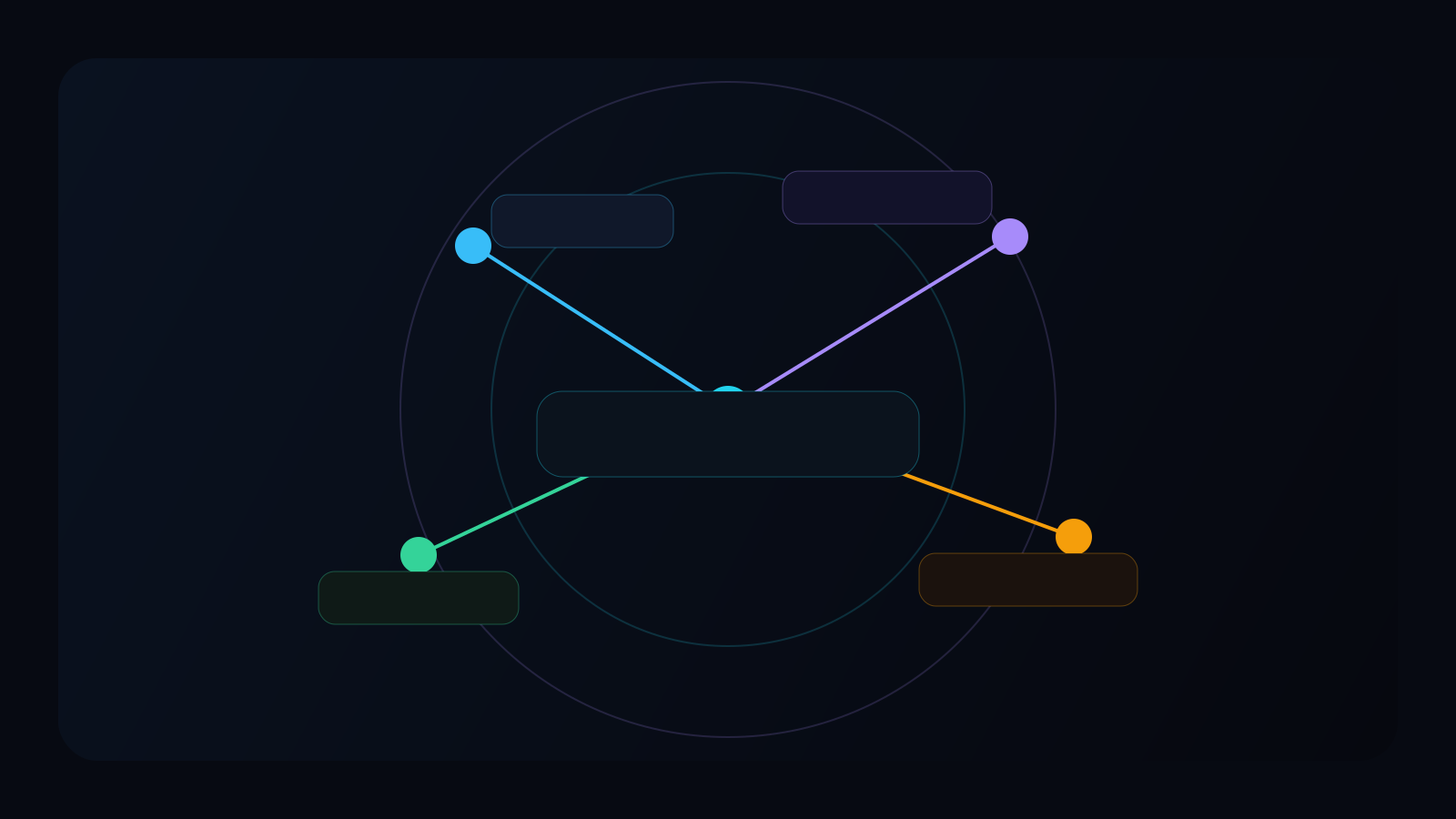
In practice, OMEGA should map the application, detect protocol behaviors, classify likely weakness families, then hand off only the strongest branches to Aegis. That preserves speed while massively improving precision.
Recommended control flow
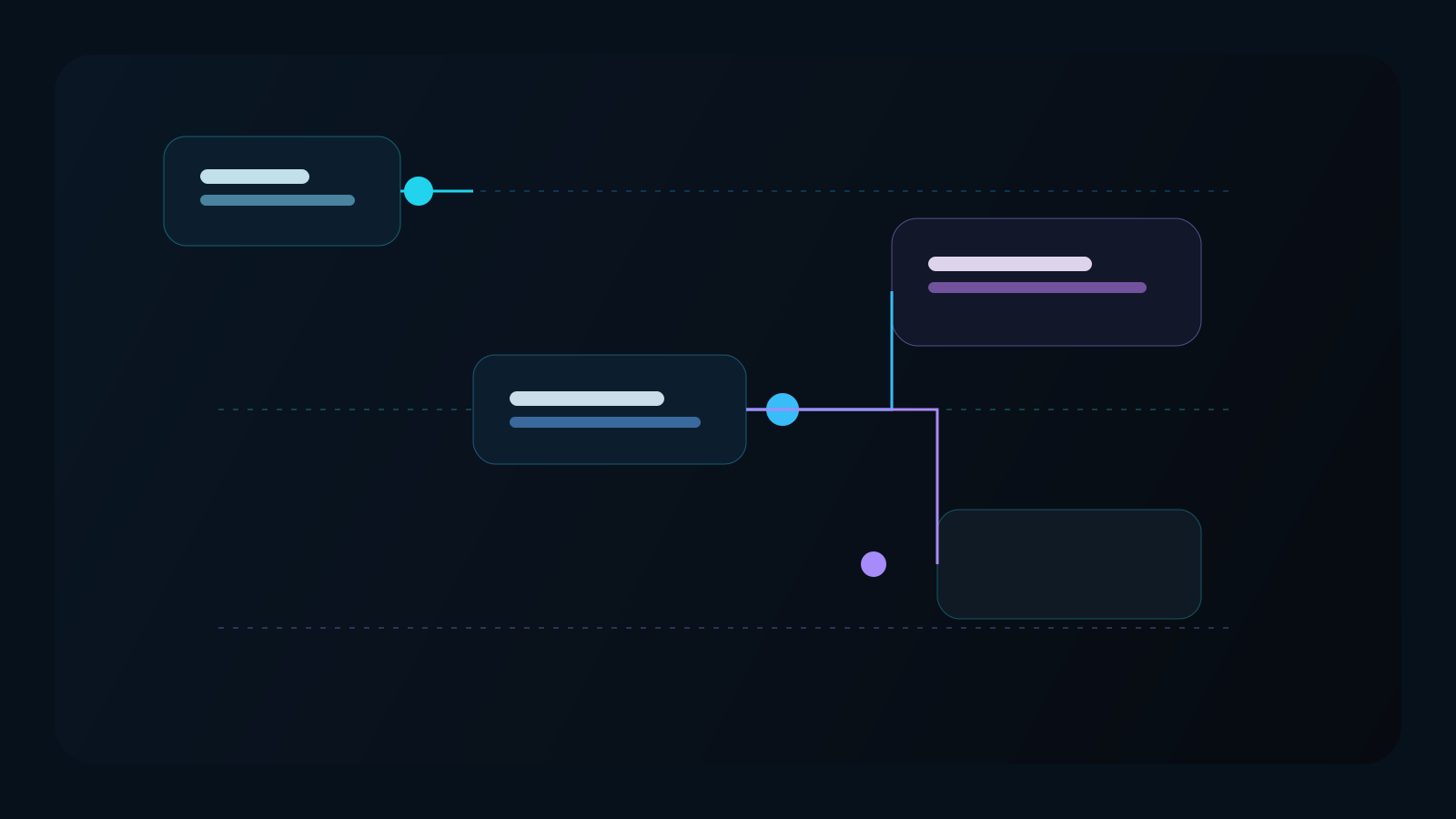
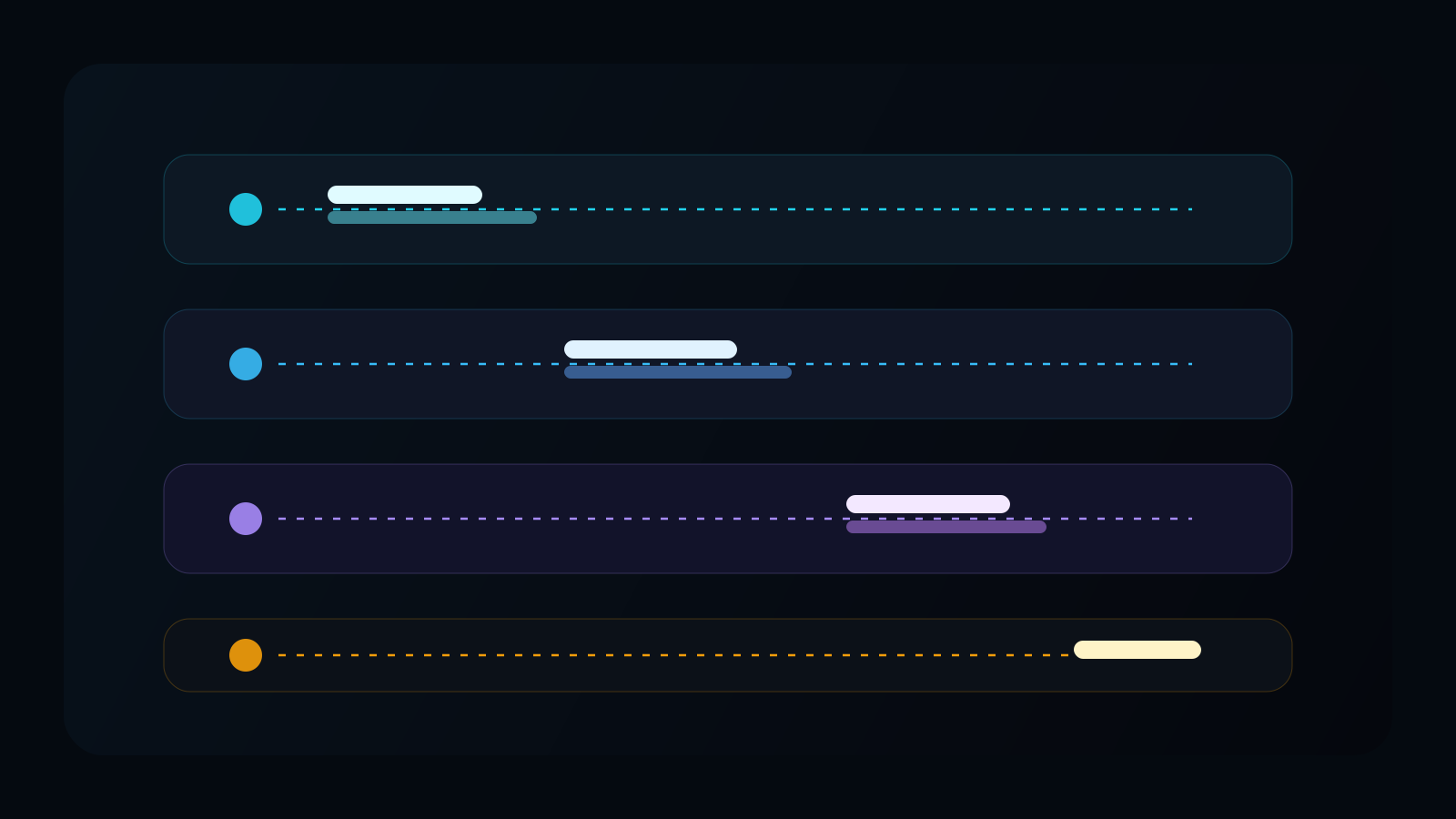
Target -> passive intel -> stack map -> route scoring -> branch selection -> Aegis execution -> proof verification -> reportWhat the plan should include
A serious planning object should be visible to the user. It should show the hypothesis, why each phase exists, what tool or module will run, what evidence triggered the choice, and what the success and failure conditions are.
This is where CyberMind can beat generic AI shells. Instead of vague chat output, OMEGA can produce operator-grade planning artifacts that users can trust, review, save, and rerun.
- Branch name and rationale.
- Tool set and flags.
- Expected evidence.
- Risk and noise score.
- Stop conditions and approval gates.
High-value upgrades for OMEGA
The next step is adaptive memory. OMEGA should remember how a target class behaved previously, what WAF patterns blocked progress, and which probes produced the highest signal in the past. That makes each new run smarter.
Second, it should produce a short executive summary and a deep operator plan. Beginners need guidance. Advanced users need the raw chain and evidence.
- Per-target memory and diff mode.
- Confidence scoring for every plan branch.
- Evidence snapshots before and after execution.
- Automatic downgrade to safe mode on noisy targets.