Key takeaways
What Aegis brings to the stack
The Aegis repository is positioned as an autonomous red-team and offensive security tool with AI-driven workflows. Based on the public repository surface, the value proposition centers on running deep offensive tasks from one system instead of loosely wiring many separate scripts together.
That makes it a strong candidate for CyberMind integration, but only if CyberMind keeps control of planning, evidence collection, and operator-facing narrative.
- Strong fit as a deeper execution engine.
- Best used after route selection, not before it.
- Useful for proof-heavy branches like protocol abuse, chain validation, and operator review.
How CyberMind should use Aegis
If I were designing this stack, CyberMind would own the control plane: target intake, plan generation, scope policy, confidence scoring, and reporting. Aegis would own selected execution paths where deeper offensive logic or attack-graph style reasoning pays off.
This split keeps the product understandable. Users do not want two products arguing about what happens next. They want one planner and one clearly scoped specialist engine.
Suggested branch-scoped orchestration
cybermind /plan target.com --mode omega
cybermind /branch select http-smuggling
cybermind /aegis run http-smuggling --target target.com --capture-evidence
cybermind /verify --latest
cybermind report --latest
Features worth building around the integration
The integration should not stop at shelling out to another tool. The user should see why Aegis was chosen, what it is doing, what evidence it found, and what the confidence score is for each output artifact.
This is where CyberMind can become more than a wrapper. It can become the trusted operator console sitting on top of powerful execution engines.
- Aegis branch recommendations generated by OMEGA.
- Evidence snapshots attached to every Aegis run.
- Automatic conversion of raw output into bounty-ready findings.
- Attack graph summaries translated into plain-language operator notes.
The biggest product risk
The risk is duplicated complexity. If both CyberMind and Aegis try to be the planner, the user experience gets muddy fast. Commands become harder to trust, failures become harder to debug, and your marketing becomes less believable.
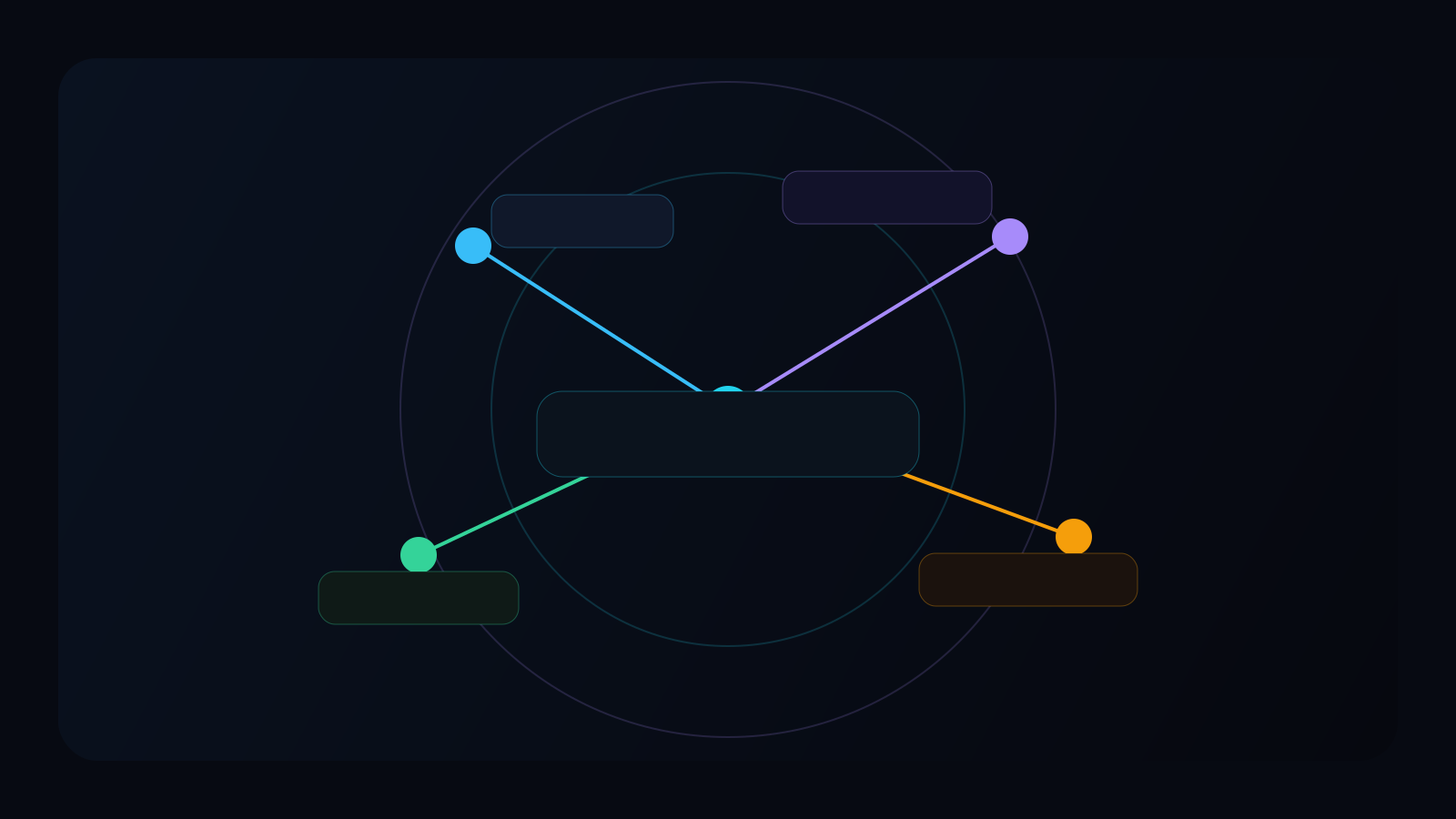
The clean answer is hierarchy: OMEGA plans, Aegis executes selected branches, CyberMind verifies and reports.
FAQ
Should Aegis replace OMEGA?
No. OMEGA should remain the planning layer. Aegis should be the high-power branch executor chosen by OMEGA when a route justifies it.